

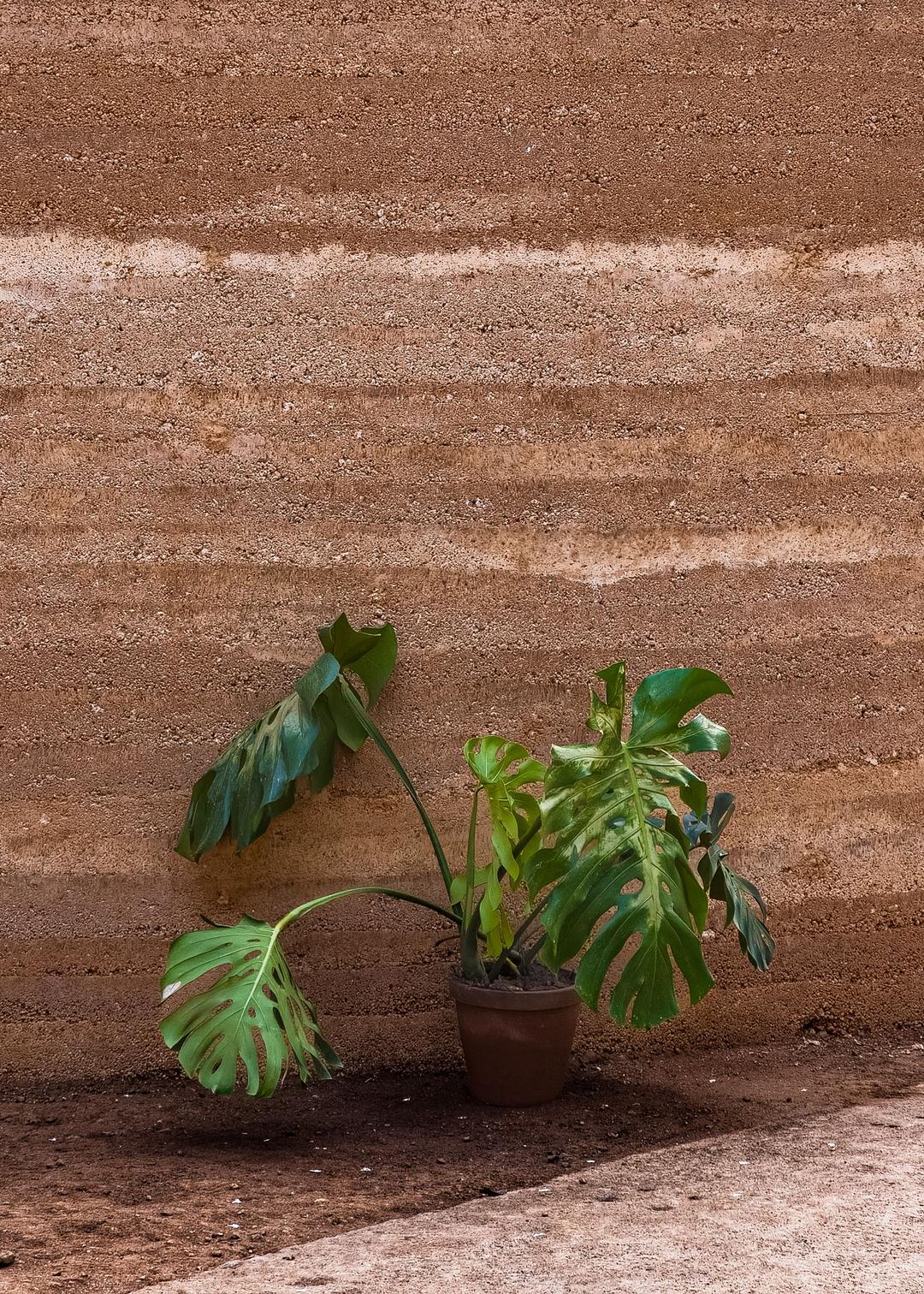
This is the first post in a series on, sustainable but ancient construction methods, earning their place in the era of AI.
Rammed Earth...
Is damp subsoil compacted in layers inside formwork until it becomes a monolithic wall. No firing, no factory, and often no lorry.
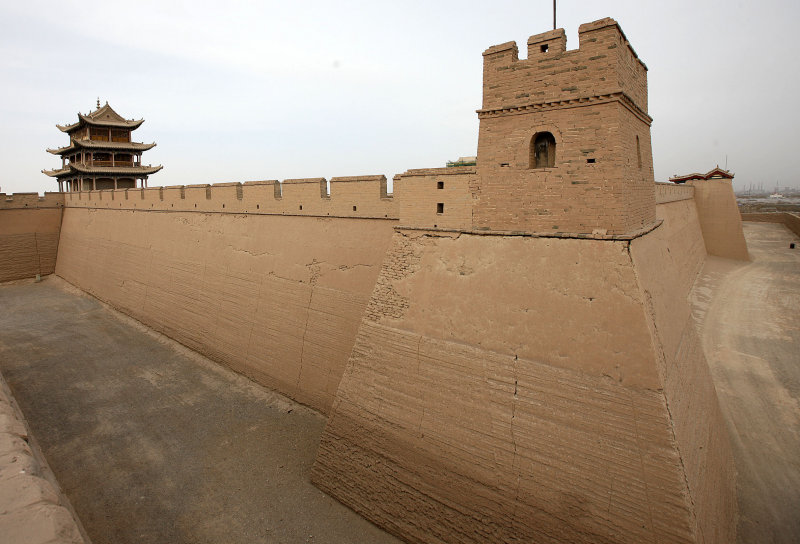
The material is frequently dug from the building's own site. Sections of the Great Wall of China have stood in it for over 2,000 years.
It fell out of use for one reason:
Ramming earth by hand is slow, repetitive, brutal work, and Portland cement made that labour uneconomical.
The material never failed. The economics did.
That's now reversing. In Austria, Martin Rauch's semi-automated ERDEN line produced 666 prefabricated rammed earth blocks in five months for Herzog & de Meuron's Ricola Kräuterzentrum. Europe's largest rammed earth building.
Neural networks can predict an earth mix's compressive strength from soil data before anything is built. Computer vision can verify compaction quality layer by layer.
Every barrier that killed this material is a repetition, prediction, or verification problem. The three things AI does best.
Sections of the Great Wall of China are rammed earth. Still standing after two millennia of frost, wind and war.
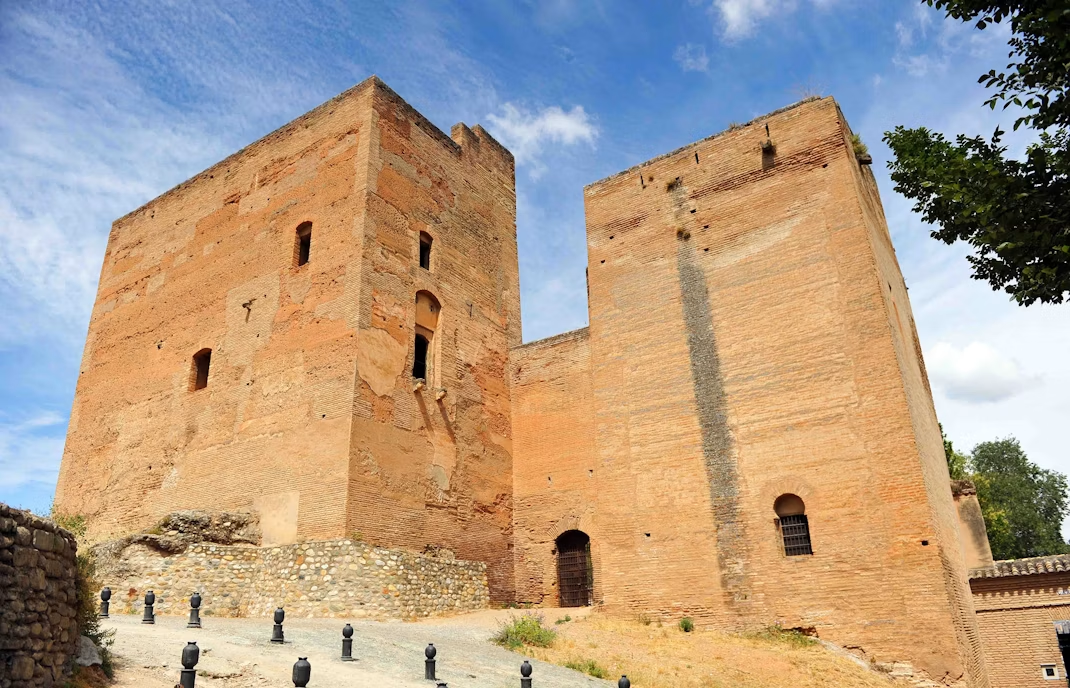
Parts of the Alhambra in Granada. 'Tapial', as the Spanish call it. Have shrugged off eight centuries of Mediterranean sun.
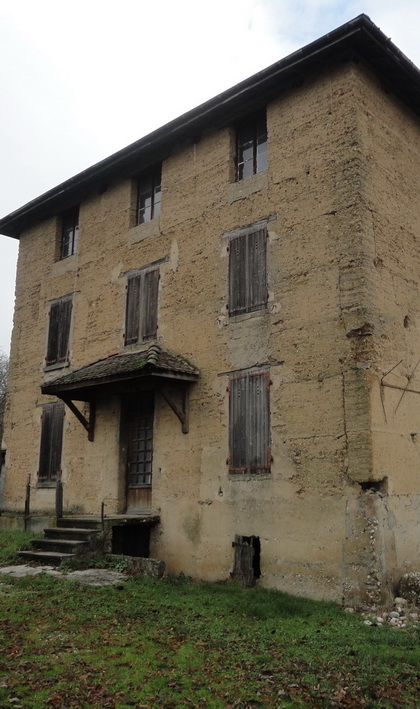
From the Pisé Farmhouses of the Rhône Valley to the fortress towns of Morocco, compacted earth is one of humanity's longest-running durability experiments.
It hasn't failed yet.
And the ancients were onto something engineers now measure in kilowatt-hours. A thick earth wall is a thermal flywheel. It soaks up heat by day and releases it at night, flattening indoor temperature swings without a watt of mechanical cooling. It regulates humidity. It doesn't burn, and it doesn't release toxic gas.
At the end of life, it returns to what it always was: soil.
By today's standards, that record is hard to beat:
For scale: cement production alone causes roughly 8% of global CO₂ emissions. The carbon cost of an earth wall is closer to the diesel in the digger that dug it.
So why isn't every eco-conscious building made of it?
Rammed earth was never a worse material than concrete.
It was a slower one to build with.
A traditional rammed-earth wall is constructed like this:
It's days of hard manual work for a wall concrete delivers in a single pour.
Once Portland cement arrived, no builder could justify the labour cost. The craft survived only in heritage repairs and passion projects.
Three obstacles calcified over the twentieth century:
Look at those three again.
Those happen to be the three things AI and robotics do best. The mapping is almost suspiciously neat.
Robots take the repetition.
The proof already exists. It's not a render.
In Austria, earth-building pioneer Martin Rauch developed Roberta, a semi-automated ramming machine at the heart of his ERDEN prefabrication line. It produced the walls of the Ricola Kräuterzentrum in Switzerland, designed by Herzog & de Meuron: 666 prefabricated rammed earth blocks in five months, from locally excavated material. The schedule, hand-ramming couldn't touch.
Researchers have since pushed further. Industrial robotic arms doing the compaction, with semi-autonomous material feeding and formwork assembly. The step that killed rammed earth's economics is the most automatable step in the entire process.
---------------------------------------------------
Machine learning takes the guesswork.
Studies training neural networks on hundreds of soil samples can now predict an earth mix's compressive strength from grain size distribution, clay content and moisture. , before anything is built.
What took a master builder a lifetime to feel in the hands, a model learns from data and applies to any soil on any site. It's not replacing the craft, it's making the craft portable.
Besides, what's the benefit of a craft that doesn't get used?
---------------------------------------------------
Computer vision takes the verification.
Computer vision is AI that reads images.
Point a camera at something, and the software works out what it's looking at. Applied here, it becomes a tireless site inspector. Researchers have trained models to judge the strength of stabilised rammed earth just by looking at microscope images of it.
On site, cameras can watch each layer go in and check it against the design in real time.
Every layer gets verified and logged as it's built. The record matters, because building codes have spent a century calling earth 'unpredictable'.
A wall with photographic evidence behind every layer is anything but. And a digital record is exactly the evidence regulators ask for.
---------------------------------------------------
BIM removes the excuses.
Earth has always sat awkwardly in BIM workflows:
The gap is closing. When soil test data goes in and a wall element with verified structural and thermal properties comes out. Carbon numbers attached, compaction logs linked. The last professional excuse for defaulting to cement gets thinner.
Specification, not sentiment, is how materials win.
The counter-argument deserves the table before the sales pitch.
Every one of those caveats is shrinking. None of them has vanished.
Concrete crosses the world to reach a site. It's quarried, kilned at 1,400°C, shipped a poured.
Rammed earth often starts in the building's own excavation pit. It's the shortest supply chain in construction.
Local used to come at a price. No two soils are the same, so every wall was a craft job. Once again, Rammed-Earth is hard to spec.
AI removes that trade-off. A prefab line takes:
It's already scaling past Europe's flagship projects. More than 50 stabilised rammed earth structures. Homes, schools, hospitals. Have gone up across Nepal in recent years. Contemporary earth buildings are also rising from Australia to rural China.
Modern buildings gave us a phrase the ancients never needed:
Sick building syndrome.
So we buy dehumidifiers, purifiers and white-noise apps to undo what the building did.
An earth wall does that work for free. Exposed clay buffers indoor humidity towards the 40–60% band, the range where human airways are happiest. That one trick has consequences. Dust mites, whose droppings are a potent allergen, struggle below about 50% humidity. Mould needs damp to grow. Hold the middle and both problems shrink.
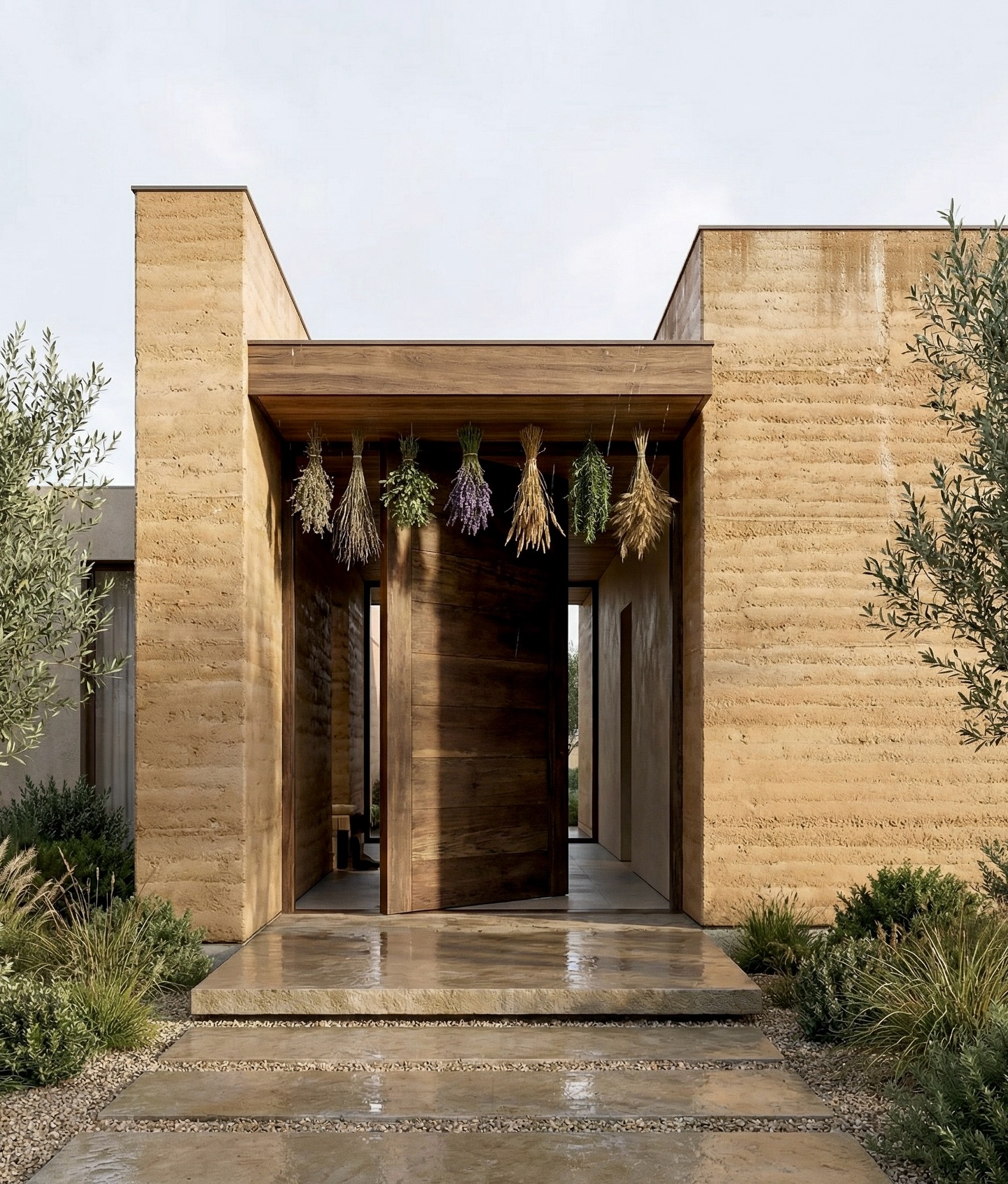
The air quality case goes further. Rammed earth releases no VOCs. The solvent fumes that off-gas from paints, glues and plastics. Independent testing of clay finishes finds none. Better still, clay absorbs pollutants from the air. The wall is a filter you never have to replace.
This is more subjective, but the claims are not baseless. Earth interiors 'feel calm'. Harder to measure, but not untrue.

Studies of natural materials in interiors record lower cortisol, lower heart rate and reduced stress markers in occupants. The nervous system appears to read earth as safe. Nobody has ever accused concrete of this.
We call all this 'healthy building' now, and sell it as a premium.
For most of building history, it was just called a wall.
Materials like rammed earth fail in practice for a boring reason:
They can't be spec'd with confidence.
It's an information problem, and the kind of Bimcopilot fixes. The Bimcopilot AI + ISO-19650 Integration Audit maps how material data flows through your project. And where AI can close the gaps that keep low-carbon options off the drawing board.
→ Book a BIMcopilot AI + ISO 19650 Integration Audit — or talk to us first.
Disagree? Tell me why.
Rammed earth waited out the concrete century the way it waits out everything.
Patiently. In walls that refuse to fall down.
Now the one thing it always lacked. Cheap, tireless, precise labour, is the very thing the robotics industry is racing to supply.
The most advanced building material of the next decade might be the one under your feet.
The AI era will pour astonishing money into inventing new materials. It should spend some of it rehabilitating old ones.
This method was never disproven. Merely priced out.